

2025: The Year Fintechs Started Becoming Banks
2025 has emerged as the year of the bank charter, with 20 non-traditional applicants submitting filings through October, representing an all-time high and triggering fundamental questions about fintech strategy. This is not just regulatory noise. This is a real strategic shift. For years, the question was simple: "Why would a fintech ever become a bank?" That question has completely flipped. For mature fintechs with lending, deposits, or large payment volumes, the real question is now: "When does it stop making sense not to?"
What changed:
Not fintech ambition. Fintech maturity. Successful fintechs have reached scale where relying on a sponsor bank becomes limiting. Product decisions need approval. Payment systems go through intermediaries. If the sponsor bank exits or gets regulated, the business is at risk. At the same time, regulators are more open than ever. The OCC and FDIC are actively encouraging fintechs to apply for charters, creating a rare window. But charter applications take years. This opportunity may not stay open forever.
What You Gain and What You Lose With a Charter
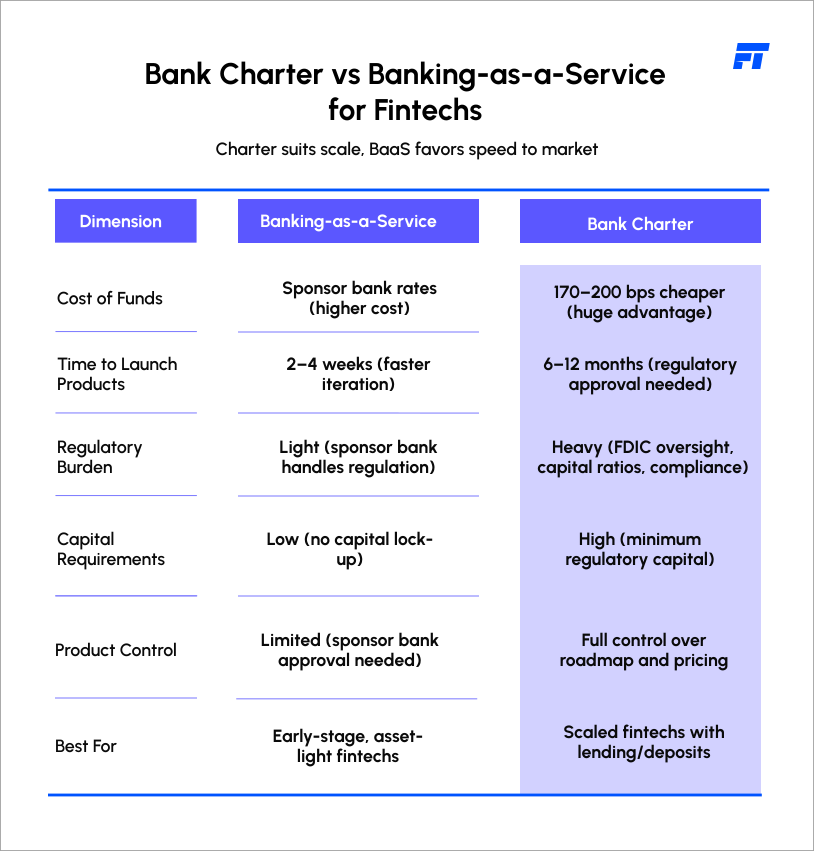
A bank charter is not a reward or a status symbol. It is a straight trade-off with clear winners and clear losers.
If you get a charter, you gain:
- Cheaper deposits as your funding source (savings of 170-200 basis points on cost of funds)
- Direct access to payment networks without middlemen
- The legal authority to lend nationally
- Control over product decisions and launch speed
- Customer trust from FDIC insurance
SoFi's charter improved its cost of funds by about 170 basis points. This single change improved its pre-tax profit by 11 percentage points.
If you get a charter, you also deal with:
- Slower decision-making due to regulatory requirements
- Much larger compliance and legal teams
- Capital locked into regulatory minimum requirements
- Culture shock moving from startup speed to regulated bank operations
- Ongoing regulatory scrutiny and reporting obligations
The key question is simple: do the benefits outweigh the costs for your specific business?
Which Fintechs Should Get a Charter (And Which Should Not)
Get a Charter If: Your business makes money from lending or deposits: If you generate net interest margin, a charter's 170-200 basis point cost savings is game-changing.
- You are already profitable and scaled: 200,000+ customers, three years of profit, strong balance sheet. You are mature enough to handle regulation.
- Your sponsor bank is a bottleneck: Your product roadmap is blocked. Your pricing is limited by their economics. You worry they might exit the partnership.
- You want to build for the long term: You are willing to spend 2-3 years on regulatory approval and ongoing compliance investment.
Skip the Charter If: You are early-stage: Asset-light models, pure software, infrastructure plays. Most early fintechs should stick with banking-as-a-service partnerships instead of chasing a charter.
- You offer one product with no deposits or lending: A charter only helps if you can use its advantages. Single-product fintechs do not gain much.
- Your business depends on moving fast: Innovation is your competitive advantage. Regulation slows you down. Charter overhead is not worth it.
- You have no path to deposits or lending: If your core business will never involve deposits or lending, charter benefits stay theoretical.
This Opportunity Window Will Not Stay Open
The political environment right now is friendly to fintech charters. The OCC and FDIC have both made clear they welcome fintech applications. But regulatory environments change when administrations change. A crisis can shift policy overnight. Enforcement actions can tighten rules quickly. For fintechs seriously considering charters, timing matters. Waiting for regulation to force your hand is the worst way to make this decision.
Is Banking-as-a-Service Dead?
No. But it is under pressure. Banking-as-a-service remains the right model for early-stage startups and asset-light fintechs. The model is not going away. But regulators are paying closer attention. Synapse, a major BaaS provider, collapsed in 2024. Since then, regulators have taken over a dozen enforcement actions against sponsor banks for weak controls. What this means: if you stay non-chartered, you need to pick a strong sponsor bank partner and have a backup plan if that partner fails.
Getting a Bank Charter Is Becoming Normal
Here is the most important insight: bank charters are becoming a natural growth stage for successful fintechs. Similar to how startups eventually go public through an IPO.
Not every fintech will pursue it. Not every fintech should. But for scaled fintechs with lending or deposits, charters are becoming a standard option.
This will reshape the fintech landscape:
- Chartered fintechs will compete on customer experience, low funding costs, and bundled products
- Non-chartered fintechs will compete on specialisation, speed, and niche markets
- Traditional banks will face pressure from digitally native competitors
This is not banks being replaced. This is the market splitting into different segments. Both chartered and non-chartered fintechs can succeed.
How to Make This Decision
If you are a fintech founder or operator, here is a simple framework:
- Step 1: Check if you qualify
Does your business generate net interest margin? Are you profitable? Do you have 200,000+ customers?
- Step 2: Calculate the benefit
How much cheaper will deposits be? How much will that improve your profit margins?
- Step 3: Assess your constraints
Is your sponsor bank limiting your product roadmap? Your pricing? Your growth?
- Step 4: Test your capability
Can you build compliance and governance infrastructure? Can you stay innovative post-charter?
- Step 5: Make a deliberate choice
Do not wait for regulation to force you. Decide now while the regulatory environment is open.
The Bottom Line
2025 created a rare window for fintechs to evaluate bank charters in a supportive regulatory environment. This window may not last. But the bigger shift is permanent: fintech maturity means charters are now a viable option for scaled businesses. For profitable fintechs with lending or deposits, charters unlock real strategic and financial value.
For early-stage or asset-light fintechs, banking-as-a-service remains optimal. The winners will be fintechs that make deliberate choices aligned with their strategy, maturity, and market position. Not reactive decisions forced by circumstances. The window creates urgency. Strategic clarity creates competitive advantage.
Ready to explore how Fyscal Technologies can help you evaluate this strategic choice?
Book a Strategy Call →